Origin of Cetaceans

0

New Addition to Web
The Evolution of Whales
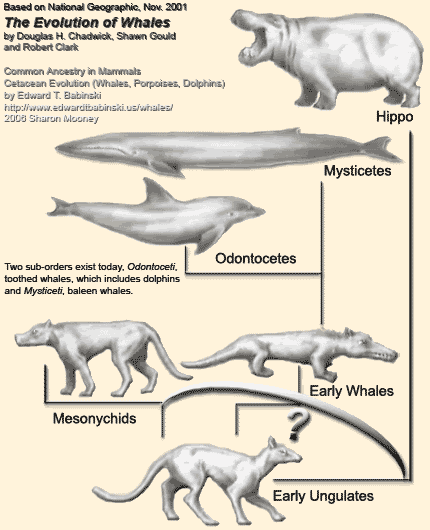
Based on National Geographic's sensational article from November 2001, by Douglas H. Chadwick, Shawn Gould and Robert Clark, The Evolution of Whales. Overview of whale origins. Includes illustrations based on fossil progressions in transitional whales and dolphins. Additional comments from early whale expert and Paleontologist, J.G.M. Thewissen, Northeastern Ohio Universities College of Medicine.


Whale Origins


"Pakicetid fossils were important in determining what whales were related to, and they were used to rebuke the idea that whales were closely related to an extinct group of hoofed mammals called mesonychians. These fossils confirmed what was already suggested by scientists studying the DNA of modern whales: that whales’ closest relatives are even-toed ungulates (artiodactyls, such as pig, hippo, camel, deer, and cows). Current research in the Thewissen lab attempts to determine how .. pakicetids locomoted in water and on land."
Source: Origin of Whales, Thewissen Lab Webpage
Read More »

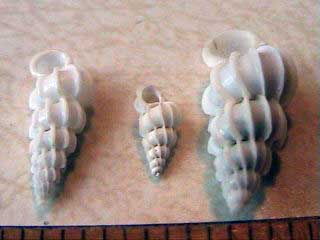
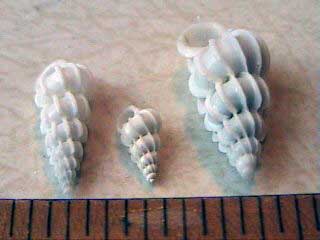
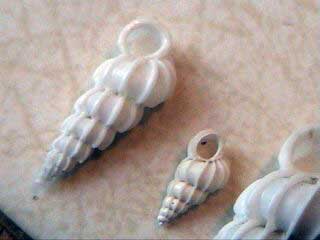
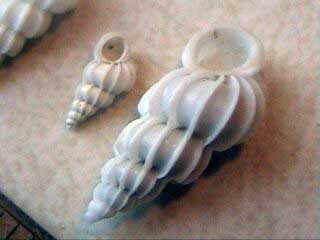
Wentletraps -Angulate vs. Humphrey

0

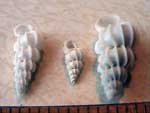
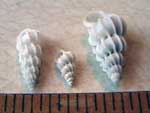
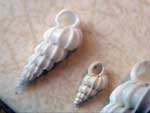
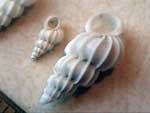
wentletrap

wentletrap

wentletrap

wentletrap


More Images

Humphrey vs. Angulate?

Gastropod

Auger-Shaped - wentletraps (Epitoniidae)

Angulate Wentletrap Epitonium angulatum (Say)
Description: (1 inch) High, slender, glossy spire. Each whorl with nine to 10 strong ribs, each slightly angled on the whorl shoulder. Smooth spaces between ribs. Round aperture. Operculum. Color: Shiny white interior and exterior. Reddish brown operculum.
Habitat: Occasionally found in drift on ocean beaches.
Range: New York to Uruguay.
Notes: (See brown-band wentletrap Notes) : Also called lined wentletrap. About 24 kinds of wentletraps have been recorded in North Carolina waters. A carnivore, it forages in sand for sea anemones and tears tissue with its jaws. It secretes a substance that turns purple and may anesthetize the anemones. Females lays strings of sand-covered egg capsules. Its young are free-swimming. The precious wentletrap (up to 2 3/4 iches long) from the Pacific Ocean is one of the prettiest shells known.
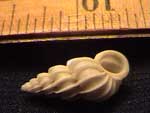

humphrey wentletrap
Humphrey Wentletrap Images


Humphrey Wentletrap Epitonium humphreysii (Kiener)
Description: (3/4 inch) Small, high-spired shell. Very similar to angulate wentletrap in appearance, habitat and numbers, but eight to nine rounded ribs on each whorl thicker and not angulate at shoulder. Also, generally more slender with a thicker lip on round aperture. Smooth spaces between ribs. Operculum.
Color: White exterior and interior. Mahogany-colored operculum.
Habitat: Occasionally found in drift on ocean beaches.
Range: Massachusetts to Texas.
Notes: (See brown-band wentletrap Notes) : Also called lined wentletrap. About 24 kinds of wentletraps have been recorded in North Carolina waters. A carnivore, it forages in sand for sea anemones and tears tissue with its jaws. It secretes a substance that turns purple and may anesthetize the anemones. Females lays strings of sand-covered egg capsules. Its young are free-swimming. The precious wentletrap (up to 2 3/4 iches long) from the Pacific Ocean is one of the prettiest shells known.
Source: Seashells of North Carolina, North Carolina Sea Grant College Program

Read More »

Some Common Coastal NC Species

Alternate Tellin
Alternate Tellin
, Tellina Alternata (Say)

Angelwing
Angelwing
, Cyrtopleura costata (Linnaeus)

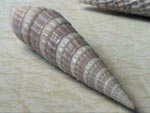
Atlantic Auger
Atlantic or Eastern Auger
, Terebra dislocata (Say)

Atlantic calico scallop
, Argopecten gibbus (Linnaeus)

Common Nutmeg
Common Nutmeg
, Cancellaria reticulata (Linnaeus)

Cross Barred Venus
Cross Barred Venus
, Chione cancellata (Linnaeus)

Angelwing
Fallen Angelwing
, Atlantic Mud Piddock, Barnea truncata (Say)

Angelwing
False Angelwing
, Petricola pholadiformis (Lamarck)

Humphrey Wentletrap
Humphrey Wentletrap
, Epitonium humphreysii (Kiener)

Imperial Venus Clam
Imperial Venus
, Chione latilirata (Conrad)

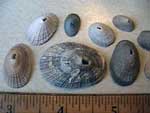
Keyhole Limpet
Cayenne keyhole limpet
, Diodora cayenensis (Larmarck)

Keyhole Sand Dollar
Keyhole Sand Dollar
, Mellita quiquiesperforata (Leske, 1778)

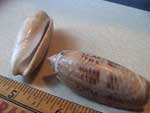
Lettered Olive
Lettered Olive
, Oliva sayana (Ravenel)