Wentletraps -Angulate vs. Humphrey

0

wentletrap

wentletrap

wentletrap

wentletrap


More Images

Humphrey vs. Angulate?

Gastropod

Auger-Shaped - wentletraps (Epitoniidae)

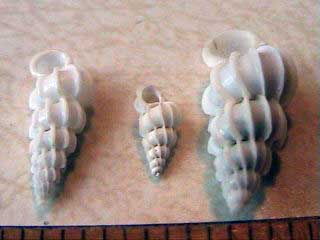
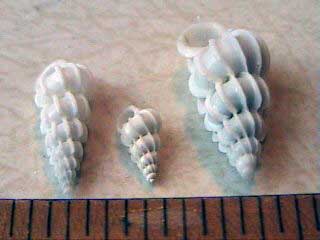
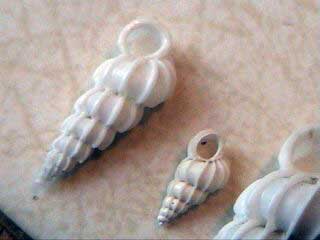
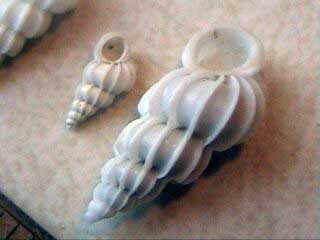
Angulate Wentletrap Epitonium angulatum (Say)
Description: (1 inch) High, slender, glossy spire. Each whorl with nine to 10 strong ribs, each slightly angled on the whorl shoulder. Smooth spaces between ribs. Round aperture. Operculum. Color: Shiny white interior and exterior. Reddish brown operculum.
Habitat: Occasionally found in drift on ocean beaches.
Range: New York to Uruguay.
Notes: (See brown-band wentletrap Notes) : Also called lined wentletrap. About 24 kinds of wentletraps have been recorded in North Carolina waters. A carnivore, it forages in sand for sea anemones and tears tissue with its jaws. It secretes a substance that turns purple and may anesthetize the anemones. Females lays strings of sand-covered egg capsules. Its young are free-swimming. The precious wentletrap (up to 2 3/4 iches long) from the Pacific Ocean is one of the prettiest shells known.
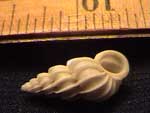

humphrey wentletrap
Humphrey Wentletrap Images


Humphrey Wentletrap Epitonium humphreysii (Kiener)
Description: (3/4 inch) Small, high-spired shell. Very similar to angulate wentletrap in appearance, habitat and numbers, but eight to nine rounded ribs on each whorl thicker and not angulate at shoulder. Also, generally more slender with a thicker lip on round aperture. Smooth spaces between ribs. Operculum.
Color: White exterior and interior. Mahogany-colored operculum.
Habitat: Occasionally found in drift on ocean beaches.
Range: Massachusetts to Texas.
Notes: (See brown-band wentletrap Notes) : Also called lined wentletrap. About 24 kinds of wentletraps have been recorded in North Carolina waters. A carnivore, it forages in sand for sea anemones and tears tissue with its jaws. It secretes a substance that turns purple and may anesthetize the anemones. Females lays strings of sand-covered egg capsules. Its young are free-swimming. The precious wentletrap (up to 2 3/4 iches long) from the Pacific Ocean is one of the prettiest shells known.
Source: Seashells of North Carolina, North Carolina Sea Grant College Program

Read More »

Common Nutmeg Cancellaria reticulata (Linnaeus)

0
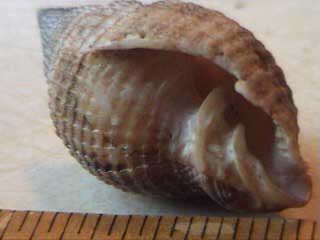
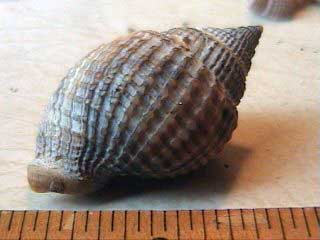
This shell came about from beach-combing,and a lady I met on the beach gave it to me. I've never found a common nutmeg shell before, so I had only one shell to share images of. This shell appears to match the shape, description and image found in the NC Sea Grant Seashell field guide.

common nutmeg
Click for 320 px image
common nutmeg
Click for 320 px image
common nutmeg
Click for 320 px image


More common nutmeg images and further information

Gastropod
Mudsnail-Shaped - nutmegs (Cancellariidae)
Common Nutmeg Cancellaria reticulata (Linnaeus)
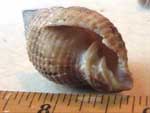
Description: (2 1/4 inches) Rough surface on shell. Many spiral cords across many axial ribs, resulting in a lattice or beaded pattern. Elongate aperture with short canal. Inner margin with two strong, thin spiral ridges running into aperture (upper ridge stronger than lower ridge). No operculum.
Color: Banded or splotched with cream and orange or brown.
Habitat: Lives offshore. Occasionally washed onto ocean beaches.
Range: North Carolina to Brazil.
Notes: This species is probably carnivorous because its radula is ideal for feeding on soft-bodied animals.Source: Seashells of North Carolina, North Carolina Sea Grant College Program
Read More »

Some Common Coastal NC Species

Alternate Tellin
Alternate Tellin
, Tellina Alternata (Say)

Angelwing
Angelwing
, Cyrtopleura costata (Linnaeus)

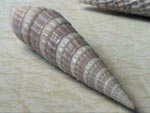
Atlantic Auger
Atlantic or Eastern Auger
, Terebra dislocata (Say)

Atlantic calico scallop
, Argopecten gibbus (Linnaeus)

Common Nutmeg
Common Nutmeg
, Cancellaria reticulata (Linnaeus)

Cross Barred Venus
Cross Barred Venus
, Chione cancellata (Linnaeus)

Angelwing
Fallen Angelwing
, Atlantic Mud Piddock, Barnea truncata (Say)

Angelwing
False Angelwing
, Petricola pholadiformis (Lamarck)

Humphrey Wentletrap
Humphrey Wentletrap
, Epitonium humphreysii (Kiener)

Imperial Venus Clam
Imperial Venus
, Chione latilirata (Conrad)

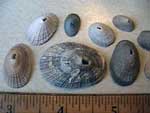
Keyhole Limpet
Cayenne keyhole limpet
, Diodora cayenensis (Larmarck)

Keyhole Sand Dollar
Keyhole Sand Dollar
, Mellita quiquiesperforata (Leske, 1778)

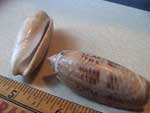
Lettered Olive
Lettered Olive
, Oliva sayana (Ravenel)